Thursday, 22 October 2015
Product - My Analysis of a Music Magazine
Within this video I am analysing the front cover, contents page and double page spread - as well as a range of pages inside the magazine; using specific media terminology for analysing the magazines precisely.

Saturday, 17 October 2015
Generic Research - Analysis of 'Q' Magazine
Analysis of 'Q' magazine from Scriptette2012
In class this week, our main focus has been on really extending our knowledge of music magazines and the various different music genres which are found within them.
Often, in music magazines, there is a niche target audience; meaning that the magazine is aimed at certain groups/types of people. So to understand this further, we have had to undertake several research tasks which have broadened our knowledge on such areas and has prepared us for tasks such as the one I have completed above.
This is another Powerpoint that I uploaded onto the site SlideShare. And in this PowerPoint, I have analysed the front cover, contents page and double-page spread of the music magazine 'Q'. Ultimately, before carrying out the task of creating the front cover, contents page and double-page spread or our own music magazines, we have had to use the knowledge of which we have learnt- (e.g; that the title is called the masthead, and if a magazine has logos or pieces of information placed in the two top corners these are called pugs) - to then analyse different music magazines, such as 'Q'.
And what this knowledge will help us to do, is be able to effectively create our own music magazine; where we can either stick to the typical codes and conventions (like always having one main image in a mid-shot/close-up/medium shot that is placed in the centre of the page). Or, if we decide to challenge this, then we will be able to do this effectively, and explain so in an evaluation.
In class this week, our main focus has been on really extending our knowledge of music magazines and the various different music genres which are found within them.
Often, in music magazines, there is a niche target audience; meaning that the magazine is aimed at certain groups/types of people. So to understand this further, we have had to undertake several research tasks which have broadened our knowledge on such areas and has prepared us for tasks such as the one I have completed above.
This is another Powerpoint that I uploaded onto the site SlideShare. And in this PowerPoint, I have analysed the front cover, contents page and double-page spread of the music magazine 'Q'. Ultimately, before carrying out the task of creating the front cover, contents page and double-page spread or our own music magazines, we have had to use the knowledge of which we have learnt- (e.g; that the title is called the masthead, and if a magazine has logos or pieces of information placed in the two top corners these are called pugs) - to then analyse different music magazines, such as 'Q'.
And what this knowledge will help us to do, is be able to effectively create our own music magazine; where we can either stick to the typical codes and conventions (like always having one main image in a mid-shot/close-up/medium shot that is placed in the centre of the page). Or, if we decide to challenge this, then we will be able to do this effectively, and explain so in an evaluation.
Generic Research - Rock 'n' Roll Youth Subculture
Before I or other members of my class can begin to construct and piece together our music magazines, we have to take images over the half term to place on the front cover of our magazine. In order to do so, we have to be aware of what genre/theme we want our magazine to take. I myself am a particular fan of the classic 'rock and roll' sub-genre of music; therefore, over the half term I shall focus on taking pictures of a young, and up-and-coming rock chic.
However, before this task can be undertaken I have needed to research into the history of this genre further. To do this, I looked at three different articles.
 |
| Little Richard |
 |
| Elvis Presley |
- 1950's = many African-Americans migrated to urban cities for jobs
- so lived in close proximity with whites; which resulted in an overlap between 2 cultures
- i.e; Rock 'n' Roll was formed from Rhythm and Blues - Elvis Presley was a popular example of the influence of rock 'n' roll youth culture
- born January 8 1935 (Tupelo, Mississippi)
- moved to Memphis, Tennessee and created music by recording at Sun Records in 1954 - 1950's = parents disapproved of rock 'n' roll; thought it promoted juvenile delinquency
- music connoted sexual topics
- parents were terrified
- so teens wanted to listen to it, to rebel; it made them feel that they belonged to something
 |
| The Rolling Stones logo |
- 1955 = replaced jazz and pop standards in commercial prominence
- discussed as the "charged collisions of two racially separate genres"
- African-American and Rhythm and Blues/white country music - Genre embraced by teenagers - often middle-class/Northern/white
- music genres have the styles of clothing/language/behaviour closely linked
- providing adolescents with the essential basis for the common discovery of identity. - Rock and Roll has developed;
- began in 1950's = associated with teenagers of 2 kinds;
- BOYS = juvenile delinquents
- GIRLS = insipid sock hoppers screaming for manufactured idols on TV shows such as "American Bandstand". - Sociologists and similar media probes saw rock and rollers as innocents manipulated by mass culture.
- 1960's = rock and roll had now become rock alone
- an Anglo-American art form associated with politicised folk music. - Artists like Bob Dylan, the Beatles and the Rolling Stones inspired children and teenagers to pick up electric guitars/grow long hair/experiment in sex and drugs
- but rock and roll lost its exhilarating inspiration
- e.g; at a Rolling Stones gig in California saw the murder of a young black man
- rock lost its innocence - yet this only attracted a larger audience. - DIVISIONS; by the mid-1970's rock had lost its influence
- replaced by 'punk'The Beatles
- inspired an audience who still looked to rock; i.e; bands such as "Nirvana" (1991)

- Music is central to youth culture
- at a teenage party it's not a question of what you do, but what you do listen to. - Music matters to youth
- they cannot be understood without a serious consideration of how it fits into their lives - "it alters mood and intensifies it. Furnishes much of their slang, dominates their conversations and provides the ambiance at their social gatherings." - Music is used by youth to control mood
- whether to enhance a good or bad one; yet if a song contains violent/discriminative lyrics, it can be known to have led to suicide or violent crimes. - Adolescents use music to gain information about the adult world and withdraw from social contact
Monday, 12 October 2015
Generic Research - Music magazines
This post is about the music media and music magazines - more specifically - 'Smash Hits' and the demise of the NME.
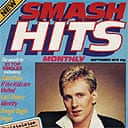 |
| The first ever edition of music magazine 'Smash Hits' |
Smash Hits was called to shutdown and stop selling due to the view that it was a "lost cause" - which has managed to shed a shocking total of 840'000 readers over the past 17 years. It is a magazine that exists in the popular imaginations of society as an ephemeral magazine; which is also associated with asking popstars rather obscure questions such as, 'What colour socks are you wearing?'. Additionally, Smash Hits is known for possessing an impertinent tone and a peculiar sense of humour - e.g; it has never questioned artists "What's your favourite colour?" but rather, "What colour is a Thursday?".
 |
| 'The Arctic Monkeys' have been heavily featured in many an issue of music magazines such as NME and Smash Hits |
Conclusively, the demise of the music magazine 'Smash Hits' and ultimately NME, has come as a result of a lack of inspiration to the artists. The magazine has truly destroyed the confidence of artists and so they've been rid of their integrity. The enthusiasm and positive promotion people had seen in previous years from NME had been dissolved and thus - the magazine has demised.
 |
| It was the arrival of bands such as 'Adam and the Ants' that saw a boost in sales for the magazine Smash Hits |
But that is not the only cause. The way society (and in particular) youth cultures has changed, means that less and less people are interested by tabloid promotion of new music. In a digital and highly-advanced technological age, people see no need to stretch their expenses to gain information which is just as accessible on the internet for free; thereby causing the sales and livelihood of NME, and other such magazines to have disappeared.
Friday, 9 October 2015
Product - Analysis of my Sixth Form magazine
 Analysis of my Sixth Form magazine;
Front cover;
- Masthead = 'Behind the Notepad'.
- masthead (or block title) came from the typical activity carried out by most sixth form students: note taking. Sixth form students aren't given a workbook to make notes in and leave at school - instead, you have to bring in your own notepads to store your own notes.
- Therefore I decided that the block title 'Behind the Notepad' would be appropriate to symbolize a "stereotypical" sixth form student.
- To stick to the typical conventions I have used a large font for my title which covers the whole of the top of the page, to make it stand out and catch an audience's eye. - Colour palette = my title is a bold/bright pink - to really make it stand out.
- Pug = issue date and number (on the right) and the issue tagline of my magazine (on the left)
- inform a reader of the time the issue was released and that it's the first issue - highlighting how it's unique.
- this will make a reader feel positively targeted; as if this magazine has been especially made for them. - Main image = mid-shot placed on the left-hand side of the page
- shows a girl smirking and holding a Notepad in front of her face (so that she is only showing her eyes i.e; direct mode of address).
- Sticks with the theme of my front cover and is a direct representation of the block title: a student standing BEHIND a Notepad.
- Additionally - placing the student on the left follows the rule of the left-third; the majority of the writing to remain on the right hand side; a viewer can read in a natural manner
- having the image nearer the bottom of the page means the main coverline can be directly underneath the block title, so it's the first story a reader notices. - Above my main image is the text which forms my main coverline;
- it's a play on words which links to the concept of the story.
- as the main coverline is short (two words), it helps to make the story sound more intriguing which attracts a reader even before they have picked up the magazine. - I have then placed the other coverlines (or sublines) down the right hand side of my page to show what else is available in the magazine to read
- I decided to supply each of my coverlines with an inner shadow effect to make them stand out from the background so that they were still clear.
- I used different shades for each one in an attempt to make it evident which one is more important. - Colour palette = the colour scheme of pink and white wasn't to make my magazine appear as if it's targeting girls; it's an all girls sixth form - but the sixth form is mixed, and so has boys as well.
- Although pink stereotypically connotes a "girlish" colour, I felt that it promoted simplicity, and makes the magazine subtly stand out in a way that intrigued an audience due to the simple colour scheme and minimal layout.
- the colour white, however, is a neutral colour and therefore has no gender stereotype associated with it.
- helps to portray the representation of the school as calm and welcoming.
- Which also highlights that the students feel comfortable in their learning environment and enjoy the work of which they undertake. - Strip = use of buzz words such as "EXCLUSIVE"
- these act as a marketing technique which will provide a guarantee of being bought as such words offer something else to an audience. - I've gone against the typical conventions slightly by also using a form of "buzz images"
- small pictures which are bright and colourful; designed in a way that they will stand out and attract an audience.
- These are seen in the bottom right hand corner of my page; a yellow spikey shape sitting brightly on the page, with an image of a girl inside holding stationary (which subsequently links with the story above it).
- I believe this works particularly well for younger students who may be nearing the end of their GCSE'S and beginning to consider A Levels and sixth form. As a result this also highlights how my magazine targets more of a mass audience (rather than a niche audience of simply sixth form students). - I want my magazine to target not only year 12's and 13's, but younger secondary school students - and parents also.
- Because the idea of the magazine is that it'll also attract parents who may want their children to go to this school. - Consecutively, I feel that this represents the school as being caring and concerned for every student in the school.
- they take pride in their work and want other students to feel ready to take the next step in their education.

Contents Page;
- Background = has now been changed to a light, sky blue colour.
- which represents the nature of the school as a bright, happy place to be. - Also, if a member of my target audience has picked up the magazine after seeing the front cover, I want the reason why the front cover attracted them to carry on through to my contents page.
- Colour scheme = I've kept the masthead in a pink shade, however
- I have kept each of my main coverlines in a white shade - with the same inner shadow effect (and I have also used an outer highlight effect on some of them too) so that the stories are equally as attractive as they were on the front cover. - Structure of my contents page = more 'busy' - conveying more images which are colourful and reasonably large in size.
- There are some images which were seen on the front cover, and others which weren't to go alongside additional stories, which will hopefully create more anticipation to read the magazine for an audience.
- For one of my stories I have selected them off of the Internet an used well known celebrity 'YouTuber's'
- for the target audience these pictures alone will make them want to carry on reading the magazine. - Coverlines = have page numbers placed next to them, so a reader knows what story is linked to what image, and where they can find it in the magazine.
- Lastly, I believe that by not sticking to the expected conventions of a magazine's content page (eg; not having a designated left third or strip) it helps to make the magazine appear more interesting; helping to attract my target audience.
- Buzz words = ensure my mass target audience will want to read this magazine.
- Finally, by scattering the contents page with a collection of bright, intriguing images: aids the representation of the institution
- students are happy, comfortable and have fun
- but also work hard and are dedicated to their work
- shown by the range of stories which are on the page (e.g; "the ultimate discourse" - related to English/ "musical chairs" - which is associated to the students in the sixth form).
Tuesday, 6 October 2015
Generic Research - Youth Culture Research
Today I shall be discussing the topic of 'youth cultures/subcultures'. To discuss this topic, I shall be sharing with you the research I discovered from three different websites we were provided with in class this week.
The first article of which I read was taken from the newspaper 'The Guardian' which was titled "Youth Subcultures: What are they Now?"
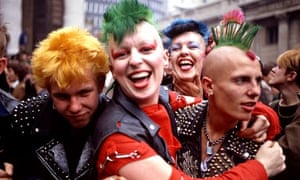
- Opening paragraph of the article;
-1980's - clear what tribe a young person belonged to/what music they were into by the clothing that they wore, e.g; mods, punks, soulboys, metallers, goths etc.
-Today - the more typical and popular form of youth subculture is that of the 'haul' girl and YouTuber's;
- these are girls who buy a lot of clothes or beauty products amd film in a video - one by one - then post it on the internet for people to watch.
- By going through each clothing item or beauty product one by one, it allows an audience to understand that person's identity. - Only evident type of youth subculture today which is portrayed through dress-sense is that of goths and emos.
- Yet previously, this form of youth subculture appeared unpopular: with reports that such music tastes resulted in a higher rate of teenage suicide.
- Some theories state that teenagers are too worried about their financial futures to experiment in where their personality and identity lies.
- don't feel the need to rebel through their dress due to the entertainment which is on offer.
- Easier to hide online and represent yourself in a social media world, which is free. - Youth cultures today are ultimately - formed, grab people's attention for a while in mainstream pop, and then die away.
- The closest thing to youth culture from the 1980's we have today appears to be YouTuber's (ie; 'haul' girls) - who express identity through good taste and precise attention to detail.
The second article I observed came from the introductory chapter of David Fowler's book titled 'British Youth Culture'.
- 'Youth culture' was originally introduced in America during the year of 1942, and didn't formulate in Britain really until 20 years later.
- Sociologist Professor Richard Hoggart, and his young understudy Stuart Hall set up "The Centre for Contemporary 'Cultural Studies'" in 1962 at the University of Birmingham. - Sociologists pioneered the study of youth culture in Britain in the 1960's. - however, the research was highly influenced by media reports as well.
- Youth culture and subculture intrigued a range of sociologists and historians (e.g; J. H. Plumb, and Herbert Butterfield) through the 1960's and 70's
- everyone who could read or access a television was also subject to it e.; 'The Beatles' of whom arrived in 1963.
- The success of The Beatles formulated the term of 'fan worship' which had never been seen before in Britain (more common forms of fan worship were seen in America). - 1964, a new form of youth subculture appeared - 'mods'
- wore their hair long to distinguish themselves from others.
- By the late 1960's British youth culture had been consumed by drug use, promiscuity and student unrest. - 1967 saw the arrival of Mick Jagger who left the London School of Economics behind to become a rock star
- he ultimately became known as the leader of a 'new' youth culture. - Social and economic factors have influenced the change of youth culture movement
- e.g; the increase of 'white-collar jobs' between the two world wars - giving young girls jobs and also introducing the culture of "The Flapper".
- Hoggart defined youth culture as an alien presence in Britain; often criticising cultures such as "Teddy Boys", who contributed very little to society. - Between WW1/2, the most significant university in the study of youth culture and subculture was Cambridge
- home to middle-class sociologists and researchers i.e; Rolf Gardiner (who was middle class and went to Cambridge).
- Cambridge continued to influence youth culture after WW2: even producing the psychedelic pop group of 'Pink Floyd'.
Finally, the last article I looked at was titled "The Death of Music Press in the UK".

- Number of music press sales are decreasing - e.g; music magazine 'Q' has gone from selling 200'000 to 50'000 copies today.
- NME's sales have decreased to 20'000. - NME has produced tablet articles online following newspapers
- yet has only 1200 subscribers. - Often, teenagers see no point in spending money on a magazine which is solely politcial/highly intellectual, when they can download music-based media probes for free
- highlights the magazine's decrease in numbers. - Today it appears that these magazines target adults more than they do teenagers.
- Mid-90's - music weeklies sold over 1'000'000 copies to youngsters, and music magazines relied on budding musicians who desired a musical career to help them sell. Yet t
- Today, young people lack the drive and creative vision that was there before.
- people used to be unafraid to express opinion.
- the lack of this today prevents young people from prospering into adulthood - which highlights an evidence as to why the sale of music magazines such as NME have declined.
Monday, 5 October 2015
Planning - My Editing Progress so Far
So just a quick post today on my current editing progress with the images for my Sixth form magazine front cover and contents pages.

So the picture below shows 4 of the images I would like to use for my front cover and contents pages. The third image in is one I have already started editing; hence why it appears much more colourful and bright compared to the rest of them. In addition, it was also taken outside - the rest were not.
However, what I believe is going to be difficult in this editing progress is making my images bright enough and saturated enough in colour to appear eye-catching and fulfil the expectations of my Sixth form magazine.
What I struggles with when taking my images was the light conditions outside - and inside as well; the images taken inside were more difficult to deal with, as the light conditions were even more difficult here. But I hope that the editing process will fix this problem and make my images fulfil their purpose.
Moreover, when I carry out the process for my music magazine, I shall ensure that the light level will be appropriate for the images I desire to produce.

Subscribe to:
Comments (Atom)